2026 Global Industrial Equipment Trade Trends and Supply Chain Insights

Hansol International
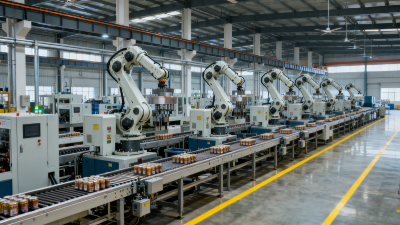
I. Reshaping the Global Industrial Equipment Trade Landscape
As we enter 2026, the global industrial equipment trade market is undergoing profound structural transformation.
Driven by manufacturing digitalization, energy transition, and infrastructure reconstruction programs,international trade in industrial equipment is trending toward “decentralization, high-tech integration, and intelligence.”
According to data from the WTO and UN Comtrade,
global industrial equipment trade volume is projected to exceed $3.6 trillion in 2025, an increase of approximately 8.2% year-over-year.
Asia (particularly China, India, and Vietnam) and Europe (Germany, Poland) remain core regions in the industrial supply chain,
while the Middle East, Africa, and South America are emerging as the fastest-growing “new demand engines.”
II. Five Key Industry Trends Shaping Global Industrial Equipment Trade in 2026
1️⃣ Manufacturing Reshoring and “Multipolar Supply Chain” Strategy
Global manufacturing is accelerating its reshoring and decentralized layout, forming a multipolar industrial structure centered on “China + ASEAN + Europe + Americas.”
Traders and equipment manufacturers are restructuring procurement and distribution systems to ensure supply stability.
- Vietnam, Indonesia, and Mexico are becoming new processing and assembly hubs;
- Companies increasingly prefer trade partners with global networks and local service capabilities;
- Regional supply chain collaboration has become critical to the success of multinational projects.
2️⃣ Automation and Smart Manufacturing Driving Equipment Export Growth
Automation and Industry 4.0 technologies are now the primary drivers of export growth in industrial equipment.
High-demand categories in cross-border trade include robotic systems, sensor networks, CNC machine tools, intelligent assembly lines, and energy management systems.
According to MarketsandMarkets,
global exports of smart manufacturing equipment are expected to surpass $980 billion in 2025.
This means traders must:
- Develop deeper insights into technological trends;
- Integrate digital capabilities and service offerings into equipment procurement;
- Seamlessly integrate with AI-powered supply chain management systems.
3️⃣ Rise of Green Energy and Low-Carbon Equipment
Amid widespread adoption of carbon neutrality goals and ESG (Environmental, Social, Governance) standards,
the industrial equipment market is shifting toward “green production and energy-efficient machinery.”
- Wind, solar, hydrogen, and energy storage sectors are driving exports of green equipment;
- Demand is rising for energy-efficient motors, intelligent control systems, and exhaust purification devices;
- European and North American buyers are placing greater emphasis on equipment carbon footprints and supply chain transparency.
This requires traders to offer not just products, but also environmental certifications and sustainable supply chain capabilities.
4️⃣ Digital Supply Chain Management as a Core Competitive Advantage
With frequent global supply chain disruptions, companies are shifting from traditional operations to digital, visible, and predictive management.
-
AI-driven forecasting and automated scheduling systems reduce inventory risks
-
Enhanced supply chain traceability improves compliance and security
-
Real-time data monitoring enables faster response to market demands
Hansol International leverages its proprietary AI-powered trade management platform
to achieve end-to-end visibility and risk control—from order placement and shipping to delivery—
helping industrial equipment traders reduce delivery lead times by 30% and improve operational efficiency by 40%.
5️⃣ Rising Compliance Barriers and Geopolitical Risks
International trade policies in 2026 are becoming increasingly complex:
-
Europe is strengthening its Carbon Border Adjustment Mechanism (CBAM);
-
The U.S. is tightening export controls on advanced equipment and technologies;
-
Markets in the Middle East and Africa are accelerating local manufacturing and import substitution policies.
In this environment, trading firms must possess global compliance capabilities and multi-market risk management systems
to ensure business continuity and long-term competitiveness.
Backed by legal and compliance teams across multiple jurisdictions, Hansol International provides partners with:
-
Support for export certifications (CE, UL, ISO, RoHS)
-
International credit assessment and trade finance guidance
-
Cross-market tax and customs consulting services
III. Data Insights: Global Industrial Equipment Trade Flows (2026 Forecast)
| Region | Export Growth Rate | Key Export Categories | Import Demand Trends |
|---|---|---|---|
| Asia | +9.3% | Automation equipment, sensor control systems, robotic components | Strong demand for intelligent manufacturing upgrades |
| Europe | +5.8% | Energy equipment, environmental machinery, production line components | Growing procurement of sustainable and energy-efficient equipment |
| Middle East & Africa | +11.7% | Construction machinery, power equipment, pump and valve systems | Infrastructure and energy investments driving demand |
| North America | +7.2% | High-precision machine tools, intelligent control equipment | Industrial reshoring and energy independence policies fueling demand |
| South America | +6.5% | Engineering machinery, automated packaging equipment | Rapid expansion of processing and manufacturing sectors |
IV. From Trends to Action: Hansol International’s Strategic Response
Facing global industrial chain transformation and supply chain complexity,
Hansol International is empowering clients to break into international markets through three strategic pillars:
1️⃣ Intelligent Supply Chain Upgrading
Leveraging AI algorithms and ERP systems to optimize procurement, logistics, warehousing, and cash flow—achieving seamless integration of physical, information, and financial flows.
2️⃣ Global Compliance and Risk Management Framework
Multi-country compliance teams help clients navigate complex regulations, export certifications, and credit risks.
3️⃣ Data-Driven Market Decision Support
Providing real-time price indices, equipment export analytics, and quarterly market insight reports (Global Equipment Market Insight).
Through these strategies, Hansol International acts not only as an equipment trader,
but also as an integrator of global industrial supply chains and a partner in intelligent operations.
V. Intelligent Supply Chains Redefining the Future of Industrial Trade
Industrial equipment trade in 2026 is no longer a simple buyer-seller relationship,
but a new ecosystem integrating smart technologies, sustainability principles, and global collaboration.
Future industry leaders will possess:
- Data-driven decision-making capabilities
- Resilient global supply networks
- Compliance and sustainable operations frameworks
Hansol International remains committed to its mission of “Connecting the World, Creating Value,”
leveraging global resource integration, AI-powered systems, and deep industry insights
to co-create with partners a more efficient, transparent, and sustainable era of industrial trade.
Hansol International – Empowering Global Industrial Trade Through Intelligence and Integrity.